How to split rent and bills with flatmates without a monthly argument
Sharing a flat is cheap right up until the first bill nobody remembers paying. The fix is not a stricter flatmate; it is a system everyone can see. Here is the one that works for most flats, and how Splitzy keeps it running by itself.
Decide the rules once, on move-in day
Most rent arguments are really rule arguments in disguise. Settle these four before the first month, and write them in the group description so nobody has to remember:
- Rent. Equal shares, or by room? A bigger room with an attached bathroom usually carries a larger share. Agree the split as shares, for example 2 : 2 : 1, rather than rupee amounts, so it survives a rent increase.
- Fixed bills. Electricity, water, internet, the cook, the maid. These are almost always equal.
- Groceries and household items. Equal, but only what is shared. Someone's protein powder is not a house expense.
- Who pays the landlord. One person pays, the others pay that person. Rotating it monthly is the fastest way to lose track.
Set up one group for the flat
In Splitzy, create a group of type Home, in INR, and invite everyone by email or with the group link. If the rent is split unevenly, save that as the group's default split so every rent entry pre-fills correctly. Then give the group a monthly budget, say ₹25,000 for a two-person flat, so the bar on the group card tells you how the month is going before the bills do.
Make the boring bills recurring
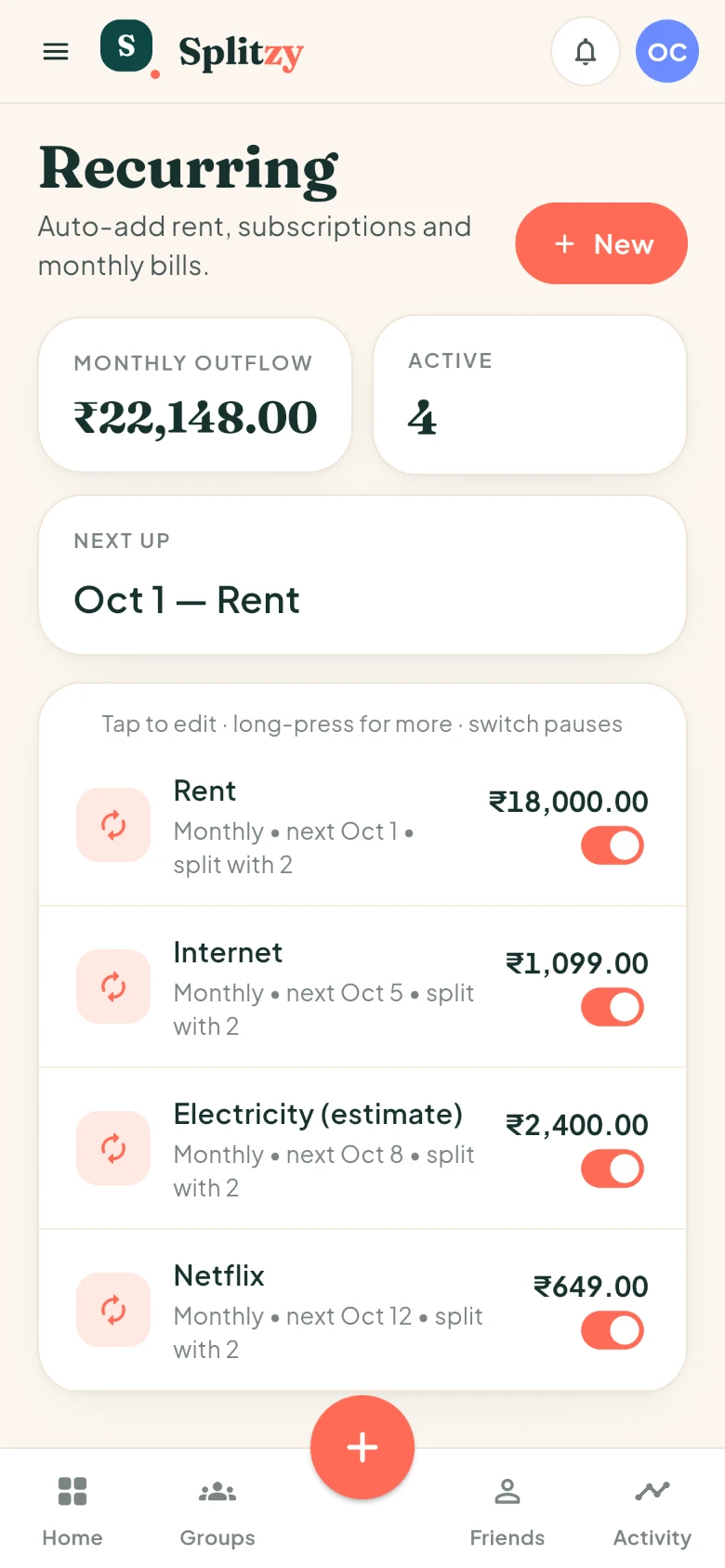
Rent, internet and subscriptions are the same every month. Add each once as a recurring expense with the right date, the person who pays it, and the split, and Splitzy adds the expense every month on its own. You will never again find out on the 20th that the rent entry for the 1st was never added.
Electricity varies, so leave that one manual, or add a recurring estimate and edit the amount when the real bill arrives. Either is better than forgetting it.
Groceries: add them as you go
The bill that breaks flats is the small one. Daniel buys the milk, Olivia buys the vegetables, nobody writes it down, and by month end each of you is sure you paid more. Add each shop as an expense the moment you get home, split equally among whoever eats in the flat. It takes ten seconds and it ends the conversation.
Settle once a month, by UPI
Open Balances on the first of the month. Splitzy shows one number per person: who owes whom, with the debts simplified so that a three-person flat usually needs two payments, not six. Pay by UPI the way you always do, then tap Settle up on that row and record the amount and the reference. Splitzy never moves money itself; it only records that the debt is cleared.
| Bill | Who pays the provider | Split | How to add it |
|---|---|---|---|
| Rent | one flatmate, always the same | by room, as shares | recurring, monthly |
| Electricity | whoever is home when it comes | equal | manual, or recurring estimate |
| Internet | the account holder | equal | recurring, monthly |
| Groceries | whoever is at the shop | equal among eaters | manual, same day |
| Maid / cook | one flatmate | equal | recurring, monthly |
When someone moves out
Settle everything up to the day they leave, record the final payment, then remove them from the group. Their expenses stay in the history so the totals still add up; they just stop being part of new splits. If they had paid the deposit on behalf of the flat, add that as an expense too, so the refund can be split when it eventually comes back.
Why not a spreadsheet or the group chat?
Both work until they do not. A spreadsheet needs one person to maintain it, and that person ends up resented. The group chat has the information, buried under 400 messages about dinner. A shared ledger everyone can add to and read is the only version that stays honest, and that is all Splitzy is.
Try it on your next bill
Splitzy is free, has no ads, and works without signal. Create a group, add the first expense, and let it keep score.